
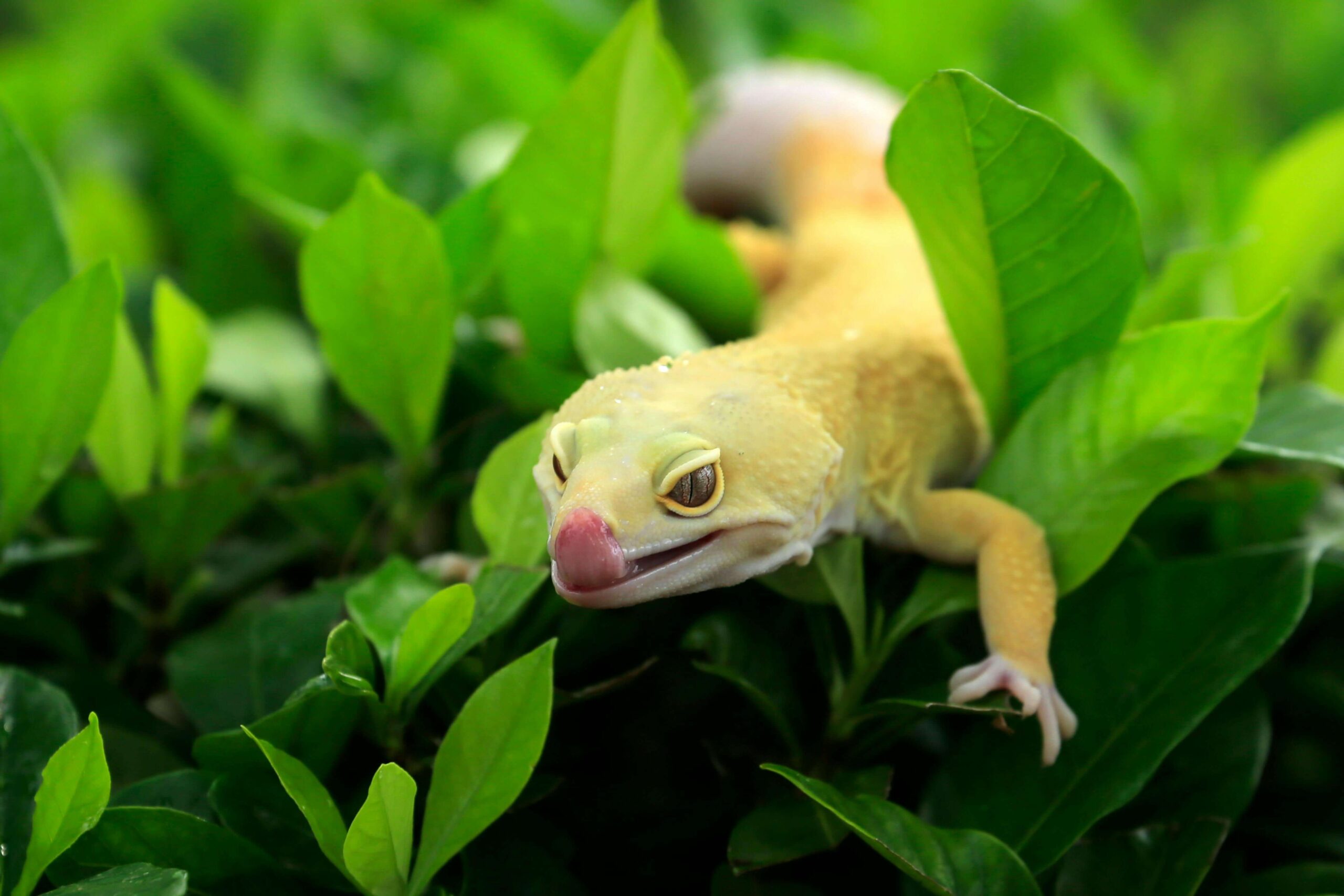
If you’ve just brought home a gecko or are thinking about getting one, one of the first questions you’ll ask is: what do geckos eat? Getting the diet right is one of the most important things you can do for your gecko’s long-term health. Feed them well and they’ll thrive for years — sometimes decades. Get it wrong and you’ll start seeing health problems that are difficult and expensive to reverse.
This guide covers everything you need to know about feeding geckos: what they eat, how often to feed them, how to supplement their diet correctly, which foods to avoid, and how diet differs between the most common species. Whether you’re a first-time keeper or an experienced reptile owner looking to fine-tune your approach, you’ll find practical answers here.
Are Geckos Carnivores, Herbivores, or Omnivores?
Most gecko species are insectivores — meaning insects make up the bulk or entirety of their diet. However, this isn’t universal. Some species, like crested geckos and day geckos, are omnivores that eat both insects and fruit. A small number of gecko species lean more herbivorous in the wild, consuming nectar, pollen, and soft plant matter alongside the occasional insect.
Understanding where your specific species falls on this spectrum is the starting point for building an appropriate diet. That said, for the majority of commonly kept pet geckos — leopard geckos, African fat-tailed geckos, tokay geckos, and house geckos among them — insects are the foundation of the diet, and that’s where we’ll focus most of this guide.
What Do Geckos Eat in the Wild?
In the wild, geckos are opportunistic hunters. They eat whatever insects, invertebrates, and small animals they can catch, which varies enormously by species and habitat. A desert-dwelling leopard gecko in Pakistan hunts beetles, spiders, centipedes, and other arthropods that cross its path. A crested gecko in New Caledonia forages for ripe fruit, nectar, and small insects among the forest canopy. A tokay gecko in Southeast Asia might eat moths, cockroaches, and even the occasional small lizard or mouse.
This variety is important context. Wild geckos eat a far wider range of prey than captive geckos typically receive, which is partly why supplementation with calcium and vitamins is so essential in captivity. A wild gecko naturally consumes nutritional variety — a captive gecko eating only crickets needs that gap filled by the keeper.
What to Feed Pet Geckos
For insectivorous geckos, a healthy captive diet is built around two or three types of feeder insects fed on rotation, supplemented with calcium and vitamins. For omnivorous species, this is supplemented with fruit-based foods or commercial meal replacement powders (MRPs).
The key principles are:
- Variety — rotating between different insect types provides a broader nutritional profile than relying on a single feeder
- Gut loading — feeding nutritious food to the insects before offering them to your gecko (more on this below)
- Supplementation — dusting insects with calcium and multivitamin powder to compensate for nutritional gaps
- Appropriate sizing — insects should be no wider than the space between your gecko’s eyes to prevent choking and impaction
The Best Feeder Insects for Geckos
Crickets
Crickets are the most widely used feeder insect for geckos and for good reason — they’re nutritious, widely available, and their movement stimulates the gecko’s natural hunting instinct. They’re an excellent staple feeder for most insectivorous species.
The main downside of crickets is that they’re noisy, they can escape easily, and uneaten crickets left in the enclosure can stress or even bite your gecko. Only put in as many crickets as your gecko will eat in one sitting, and remove any uneaten ones promptly.
Dubia Roaches
Dubia roaches have become increasingly popular as a gecko feeder in recent years, and for good reason. They have a better nutritional profile than crickets, are slower moving (making them easier for younger or less active geckos to catch), don’t make noise, can’t climb smooth surfaces, and don’t smell as strongly. They’re an excellent staple feeder and many experienced keepers use them as their primary insect.
Dubia roaches are legal to keep in most places but are banned in some Australian states due to concerns about invasive species — check your local regulations.
Mealworms
Mealworms are a convenient and readily available feeder that most geckos readily accept. They’re higher in fat than crickets or Dubia roaches, which makes them a useful treat or supplementary feeder but not ideal as a staple. Over-relying on mealworms can contribute to obesity, particularly in less active species like leopard geckos.
Mealworms should not be fed to juvenile geckos as their hard chitin shell can be difficult to digest and may cause impaction in small animals.
Waxworms
Waxworms are the gecko equivalent of candy — high in fat, highly palatable, and loved by almost every gecko that encounters them. They’re useful for putting weight on an underweight gecko or as an occasional treat, but should never be a staple feeder. Geckos that are fed too many waxworms frequently become addicted to them and will refuse other feeders, which creates serious nutritional problems.
Limit waxworms to once or twice a month as a treat.
Black Soldier Fly Larvae (Nutrigrubs / Calci-worms)
Black soldier fly larvae are one of the most nutritionally complete feeder insects available. They have an excellent calcium-to-phosphorus ratio, meaning they provide calcium naturally without relying entirely on dusting. They’re soft-bodied, easy to digest, and accepted by most gecko species. They make an excellent rotation feeder alongside crickets or Dubia roaches.
Hornworms
Hornworms are soft, large, and high in moisture — making them particularly useful for boosting hydration. They’re low in fat and relatively nutritious. Their main limitation is that they grow very quickly and can become too large for smaller geckos. Use them as a rotation feeder or a supplementary option.
Silkworms
Silkworms are an excellent feeder insect — nutritious, soft-bodied, and well-accepted by most geckos. They’re harder to source than crickets or Dubia roaches, and they have a short shelf life, but they make a great rotation feeder when available.
Fruit and Plant Matter: Which Geckos Eat It?
Not all geckos eat fruit, but for those that do, it forms an important part of a balanced diet.
Crested Geckos
Crested geckos are the most notable example of a fruit-eating pet gecko. In the wild they consume ripe fruit and nectar alongside insects. In captivity, many keepers use commercial Crested Gecko Diet (CGD) products — meal replacement powders (MRPs) made by brands like Repashy and Pangea — which are formulated to provide complete nutrition when mixed with water. These can be offered as the staple diet alongside regular insect feedings, or in some cases as the primary food source.
Suitable fruits for crested geckos include mango, papaya, fig, and banana. Citrus fruits and pineapple should be avoided as their high acid content can cause digestive issues.
Day Geckos
Day geckos (genus Phelsuma) are omnivores that consume nectar, soft fruit, and insects in the wild. In captivity they do well on a combination of feeder insects and fruit-based foods or commercial MRPs formulated for frugivorous geckos.
Gargoyle Geckos
Like crested geckos, gargoyle geckos are omnivores that benefit from a diet combining insects and fruit-based foods or CGD products.
Leopard Geckos and Most Other Species
Leopard geckos, African fat-tailed geckos, tokay geckos, and most other commonly kept species are strictly insectivorous in captivity. They do not need and should not be offered fruit or plant matter.
How Often Should You Feed Your Gecko?
Feeding frequency depends primarily on age.
Juvenile geckos (under 6 months) should be fed daily. They’re growing rapidly and have high energy demands. Offer as many appropriately sized insects as they’ll eat in 10–15 minutes.
Sub-adult geckos (6–12 months) can be fed every other day. Growth is still ongoing but at a slower rate.
Adult geckos (12 months and over) are typically fed every 2–3 days. Overfeeding adults, particularly less active species, is a common cause of obesity.
For omnivorous species that eat CGD or fruit-based foods alongside insects, the MRP or fruit component can be offered 2–3 times per week, with insects offered once or twice per week on top.
How Much Should You Feed Your Gecko?
A common guideline for insectivorous geckos is to offer 2–3 insects per inch of the gecko’s body length per feeding session. So a 6-inch adult leopard gecko would receive roughly 12–18 appropriately sized insects per feeding.
In practice, the best approach is to observe your gecko and adjust accordingly. A gecko that consistently leaves food uneaten is being overfed. A gecko that finishes everything rapidly and continues to hunt is likely underfed. Tail thickness is a useful indicator of body condition in many species — a fat, well-rounded tail indicates good body condition, while a thin or shrunken tail suggests the gecko needs more food.
Gut Loading: Why It Matters
Gut loading refers to feeding your feeder insects a nutritious diet for 24–48 hours before offering them to your gecko. The nutritional value of the insect is only as good as what the insect has been eating — an insect that has been starved or fed on cardboard offers very little nutritional value.
A well gut-loaded cricket or Dubia roach, on the other hand, passes those nutrients directly to your gecko when eaten.
Good gut load foods include:
- Dark leafy greens (collard greens, mustard greens, kale)
- Carrots and sweet potato
- Squash and courgette
- Commercial gut load products (available from reptile suppliers)
Avoid feeding insects high-oxalate foods like spinach, or foods high in goitrogens like broccoli in large quantities. Citrus fruits should also be avoided as gut load.
Dusting with Calcium and Vitamins
Even with excellent gut loading, captive geckos need additional calcium and vitamins that they can’t get from insects alone. This is where dusting comes in — lightly coating insects with calcium or multivitamin powder before feeding.
Calcium
Calcium is essential for bone development, muscle function, and preventing metabolic bone disease (MBD) — one of the most common and serious health problems in captive reptiles. Most keepers dust insects with calcium powder at the majority of feedings.
Calcium powder comes in two forms: with D3 and without D3. For geckos kept without UVB lighting (common for many nocturnal species), calcium with D3 is used at most feedings as they cannot synthesize vitamin D3 from sunlight. For geckos kept with UVB lighting, plain calcium without D3 is used more frequently, with D3 supplementation less often to avoid overdose.
Multivitamins
A reptile multivitamin supplement should be dusted onto insects once or twice per week. This helps fill nutritional gaps not covered by calcium alone. Avoid over-supplementing with vitamins, as fat-soluble vitamins like A and D3 can accumulate to toxic levels if given too frequently.
A common dusting schedule for a nocturnal gecko without UVB is:
- Calcium with D3: most feedings (4–5 times per week)
- Multivitamin: once per week
Water and Hydration
All geckos need access to fresh water. For most species, a small shallow water dish kept clean and refilled regularly is sufficient. The dish should be shallow enough that a small gecko or juvenile cannot drown in it.
Some geckos, particularly arboreal species, may not readily drink from a dish and instead prefer to lap water droplets from leaves or enclosure walls. For these species, lightly misting one side of the enclosure in the evening provides drinking opportunities while also helping maintain appropriate humidity levels.
Signs of dehydration in geckos include sunken eyes, sticky mucous membranes, wrinkled or loose skin, and difficulty shedding. If you suspect your gecko is dehydrated, a 15–20 minute lukewarm shallow soak can help.
Foods to Avoid
Some foods are harmful to geckos and should never be offered:
- Wild-caught insects — these may carry parasites, pesticides, or diseases
- Fireflies (lightning bugs) — toxic to all reptiles, even in small quantities
- Avocado — toxic to reptiles
- Rhubarb — toxic
- Citrus fruits — for fruit-eating species, these are too acidic
- Spinach — high in oxalic acid which binds calcium and prevents absorption
- Onion and garlic — toxic
- Any insect larger than the space between your gecko’s eyes — impaction risk
Feeding by Species
Leopard Gecko Diet
Leopard geckos are strictly insectivorous. Their staple diet in captivity consists of crickets and Dubia roaches, with mealworms offered as a supplementary feeder. Waxworms and superworms make occasional treats. All insects should be dusted with calcium and multivitamin supplements. Leopard geckos are prone to obesity so portion control matters — adults should be fed every 2–3 days rather than daily.
For a deeper look at leopard gecko care including diet, housing, and handling, see our Leopard Gecko Care Guide.
Crested Gecko Diet
Crested geckos are omnivores. The easiest and most complete way to feed a crested gecko is with a commercial Crested Gecko Diet (CGD) powder mixed with water to a smooth consistency. This should be offered 3–4 times per week. Insects — primarily small crickets or Dubia roaches — should be offered once or twice per week to provide enrichment and additional protein. Fresh fruit can be offered occasionally as a treat.
For a full breakdown of crested gecko husbandry, visit our Crested Gecko Care Guide.
African Fat-Tailed Gecko Diet
African fat-tailed geckos have very similar dietary needs to leopard geckos — they’re insectivorous and do well on a staple of crickets and Dubia roaches with appropriate supplementation. They tend to be slightly more sedentary than leopard geckos, so it’s worth monitoring body condition closely to avoid overfeeding.
Tokay Gecko Diet
Tokay geckos are larger than most commonly kept species and have a correspondingly larger appetite. They eat crickets, Dubia roaches, superworms, and can occasionally take pinky mice as adults. Their feeding is similar in principle to other insectivorous species, just scaled up in portion size.
Day Gecko Diet
Day geckos are omnivores that do well on a combination of small feeder insects and fruit-based foods or commercial MRPs. Because they’re active diurnal lizards kept with UVB lighting, their D3 requirements differ from nocturnal species — adjust your supplementation schedule accordingly.
What to Do If Your Gecko Won’t Eat
A gecko refusing food is one of the most common concerns for keepers, and in many cases it’s nothing to worry about. There are several normal reasons a gecko may go off food:
Shedding — geckos frequently refuse food in the days leading up to a shed. This is completely normal. Appetite typically returns within a day or two after shedding is complete.
Seasonal changes — many gecko species, particularly leopard geckos, naturally reduce their food intake during winter months even in captivity. This is a normal brumation-like response to shorter days and cooler temperatures.
Stress — a newly acquired gecko may refuse food for several days or even a couple of weeks while it settles into its new environment. Minimize handling and disturbance during this period.
Temperature — if the enclosure is too cold, digestion slows and appetite drops. Check that your temperatures are within the correct range for your species.
Boredom with feeders — a gecko that has been eating only one type of insect may become bored with it. Try introducing a different feeder type.
If your gecko has gone more than 2–3 weeks without eating, has lost significant weight, appears lethargic, or shows other signs of illness, consult a reptile-experienced veterinarian. Prolonged anorexia can sometimes indicate parasites, infection, or other underlying health issues.
To learn more about gecko health and common conditions, visit our Gecko Health & Diet section.
Diet FAQs
Can geckos eat fruit? Some species can — crested geckos, day geckos, and gargoyle geckos all eat fruit as part of a natural omnivorous diet. Strictly insectivorous species like leopard geckos should not be fed fruit.
Can geckos eat vegetables? Most geckos don’t eat vegetables. Omnivorous species that eat fruit-based foods will get plant nutrition from their CGD or fruit, not vegetables.
How long can a gecko go without eating? A healthy adult gecko with good body condition can go several weeks without eating during normal periods of reduced appetite such as shedding or brumation. Juveniles have less fat reserve and should not go more than a week without eating without investigation.
Can I feed my gecko dead insects? Live insects are strongly preferred as they stimulate natural hunting behavior. Some geckos will accept freshly killed insects placed with tongs, but most won’t take dried or pre-killed insects readily.
How do I know if I’m feeding my gecko enough? Monitor body condition rather than counting insects. A healthy gecko should have a well-rounded tail (in tail-storing species like leopard geckos), bright eyes, and active behavior. Visible hip bones or a very thin tail indicate underfeeding.
Do geckos need live food? For insectivorous species, live insects are the best option. The movement triggers natural hunting instincts and provides enrichment. Some keepers use feeding tongs to offer insects to reduce the risk of uneaten crickets harassing the gecko overnight.
Getting the diet right is one of the most rewarding parts of gecko keeping. A gecko that’s fed well, supplemented correctly, and offered variety will be active, alert, and genuinely fascinating to watch hunt. If you have questions about your specific species’ dietary needs, explore our Species Guides for in-depth care information tailored to individual gecko types.