
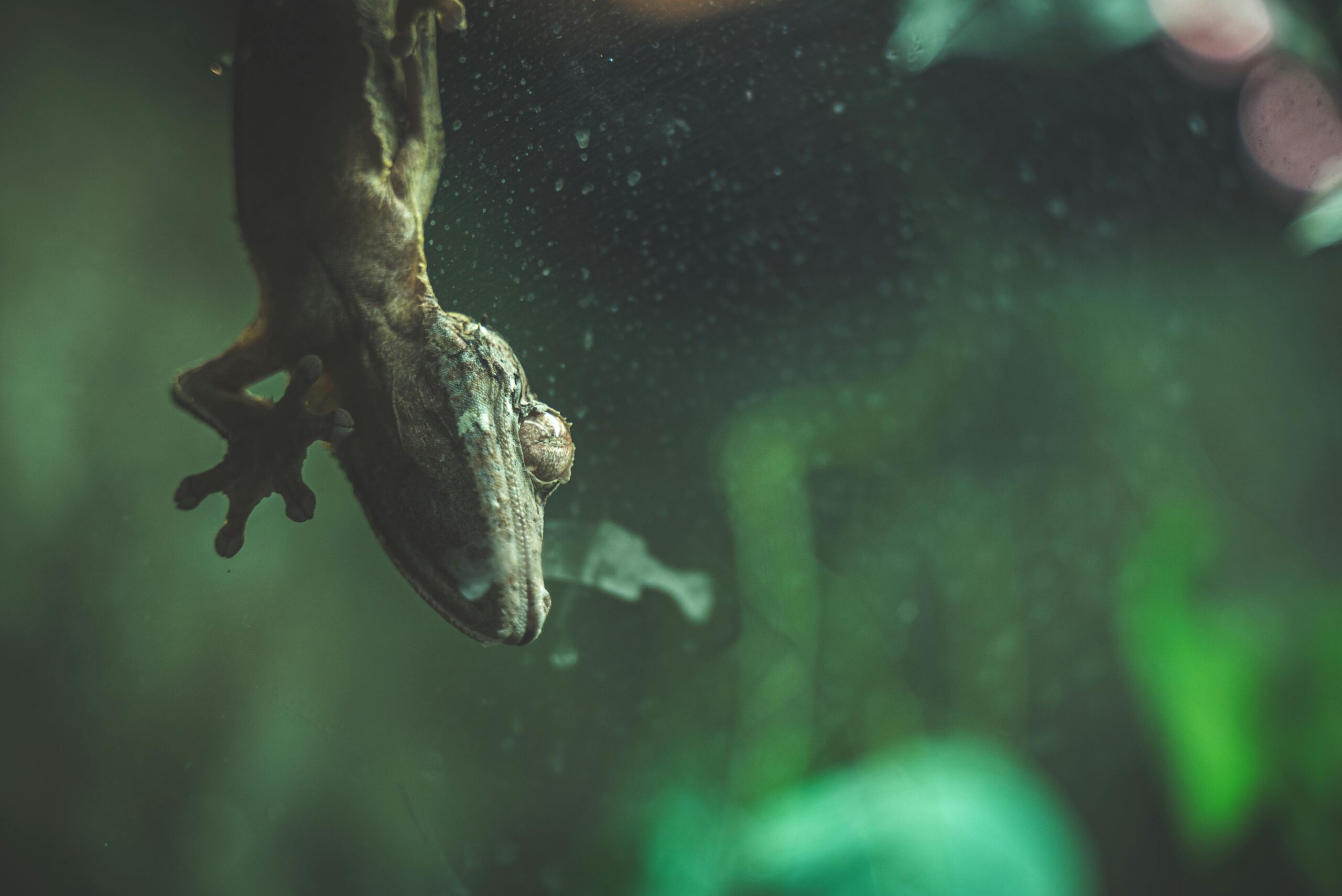
Setting up a gecko enclosure for the first time can feel overwhelming. There are a lot of products on the market, a lot of conflicting advice online, and a lot of decisions to make before your gecko even comes home. This guide cuts through the noise and gives you a clear, practical walkthrough of everything you need to set up a gecko enclosure correctly from the start.
We’ll cover enclosure size and type, substrate, hides, heating, lighting, humidity, and decoration, along with the common beginner mistakes that are easy to avoid once you know about them. By the end you’ll have a clear picture of exactly what you need and why.
Start With Your Species
The single most important thing to understand before buying any equipment is that gecko species have genuinely different requirements. A setup that’s ideal for a leopard gecko would be wrong for a crested gecko, and vice versa. Before purchasing anything, confirm the specific needs of the species you’re keeping.
This guide covers the core principles that apply broadly across commonly kept gecko species, with species-specific callouts where requirements differ significantly. If you haven’t chosen a species yet, our Species Guides section covers the most popular pet gecko species in detail to help you make the right choice.
The two most commonly kept species for beginners are leopard geckos and crested geckos, and they serve as the main examples throughout this guide because they represent the two most distinct types of gecko setups: arid ground-dwelling and humid arboreal.
Enclosure Size and Type
Size
Bigger is better when it comes to gecko enclosures, within reason. A larger enclosure gives your gecko more territory to explore, a more effective thermal gradient, and room for environmental enrichment. The minimum sizes listed below are true minimums, not ideals.
Leopard geckos need floor space above all else. A 20-gallon long enclosure (30 x 12 x 12 inches) is the widely accepted minimum for a single adult. A 40-gallon breeder (36 x 18 x 18 inches) is considerably better and gives far more room to build a proper gradient and multiple hides. Do not use a tall enclosure for leopard geckos — the vertical space is wasted and the floor area is sacrificed for it.
Crested geckos need height. A 20-gallon tall enclosure is the minimum for a single adult, but an 18 x 18 x 36 inch enclosure is a much better choice. Arboreal geckos live vertically and a tall enclosure with plenty of climbing structure gives them the space to express natural behavior.
Juvenile geckos of any species can be housed in smaller enclosures temporarily, but many keepers choose to set up the adult enclosure from the start and simply add more hides for a young gecko that might otherwise feel exposed in a large space. Either approach works.
Enclosure Type
Glass terrariums are the most widely used and a solid choice for most keepers. They’re readily available, easy to clean, visually clear, and work well with a range of heating and lighting setups. Front-opening doors are preferable to top-opening for most gecko species, as approaching from the front is less stressful for the animal than a hand coming from above, which mimics a predator.
PVC enclosures have grown in popularity for their lightweight construction, excellent heat retention, and durability. They’re particularly good for species that need stable temperatures, as PVC insulates much better than glass. The main trade-off is cost, as quality PVC enclosures tend to be more expensive than comparable glass options.
Wooden vivariums retain heat exceptionally well and work well for some species. The downsides are that wood absorbs moisture, making them harder to clean thoroughly and potentially problematic for high-humidity species, and they’re heavier and less easy to move than glass or PVC.
Substrate
Substrate is the material that lines the floor of the enclosure. It affects humidity levels, digging opportunities, hygiene, and impaction risk.
For Leopard Geckos and Arid Species
The debate around loose substrate for leopard geckos has been ongoing in the hobby for years. While wild leopard geckos do live in environments with loose soil, impaction from ingesting loose substrate in captivity is a real risk, particularly in juvenile animals or those with underlying health issues.
For beginners, the safest and most practical substrate options for leopard geckos are:
Reptile carpet is easy to use, holds no impaction risk, and is simple to clean. The main drawback is that it can harbor bacteria if not cleaned regularly, and loose fibers can occasionally catch on gecko toes.
Paper towel is the simplest substrate of all. It’s cheap, entirely safe, easy to replace, and makes it simple to monitor stool and check for health issues. Many experienced keepers use paper towel for juveniles and newly acquired animals for exactly this reason.
Tile is an excellent long-term option that’s easy to clean, holds no impaction risk, conducts heat from under-tank heaters well, and provides a naturalistic appearance. Slate tile works particularly well. Cut to fit your enclosure by a hardware store, it’s a cost-effective and durable choice.
Bioactive substrate using a mix of organic topsoil and sand is increasingly popular for leopard geckos in appropriate ratios and setups. When done correctly with a proper drainage layer and cleanup crew, bioactive setups are excellent. For a first setup, it’s worth getting the basics right before taking on the complexity of a full bioactive build.
For Crested Geckos and Humid Species
Crested geckos and other humidity-loving species need a substrate that holds moisture and supports the higher humidity levels they require.
Coconut fiber is widely used, holds humidity well, is soft and safe for digging, and works well as a base layer in bioactive setups.
ABG mix (a blend of orchid bark, coconut fiber, sphagnum moss, and organic topsoil) is the gold standard substrate for bioactive crested gecko enclosures. It supports plant growth, holds humidity excellently, and provides a naturalistic, enriching environment.
Sphagnum moss is excellent for maintaining humidity and is commonly used as a top layer or in moist hides. It has natural antibacterial properties.
Heating
Providing the right thermal gradient is more important than hitting a specific temperature number. Your gecko needs a warm end and a cool end, with the ability to move freely between them.
Under-Tank Heaters
Under-tank heaters (UTHs) are the most commonly used heating method for ground-dwelling species like leopard geckos. They heat the substrate from below, mimicking the way desert rock surfaces absorb and radiate heat. A UTH should cover roughly one third of the enclosure floor on the warm side.
UTHs must be used with a thermostat. Without one, they can overheat to temperatures that burn your gecko. A simple on/off thermostat is the minimum; a proportional thermostat gives more stable temperature control. Never run a UTH without thermostat control.
Place a thin layer of substrate over the UTH rather than a thick layer. Too much substrate insulates the heat and stops it reaching the surface where your gecko actually sits.
Overhead Heating
Overhead heating sources including ceramic heat emitters, deep heat projectors, and halogen bulbs provide heat from above, which more closely mimics radiant heat from the sun. Deep heat projectors are a newer technology that penetrates tissue more effectively than surface-only heat sources and are gaining a strong following among experienced keepers.
Overhead heating is appropriate for a wide range of gecko species and is the primary heating method for arboreal and diurnal species. It should also be used with a thermostat.
Room Temperature
Some keepers in consistently warm homes or climates rely on ambient room temperature to maintain cool-side temperatures in the enclosure, with only the warm side requiring additional heating. This works well when room temperatures stay consistently in the mid-70s Fahrenheit. Enclosures in cool rooms or during winter months will need supplemental heating throughout.
Lighting
UVB
The understanding of gecko lighting needs has evolved significantly. The traditional view that nocturnal species like leopard geckos don’t need UVB has been revised based on research suggesting many nocturnal geckos do encounter low levels of ambient UVB in the wild.
Providing low-output UVB lighting supports D3 synthesis, calcium metabolism, and overall health. A low-output UVB bulb such as the Arcadia 6% or Zoo Med Reptisun 5.0 is appropriate for most commonly kept gecko species. The bulb should be positioned to provide the correct UV index at basking distance and replaced on schedule, as UVB output degrades over time even when the bulb still produces visible light.
UVB provision doesn’t replace supplementation but complements it. For a full guide to supplements and how UVB affects your supplementation schedule, see our article on gecko vitamins and supplements.
Day/Night Cycle
All geckos benefit from a consistent day and night light cycle that mimics natural photoperiod. A simple timer set to provide 12 hours of light and 12 hours of darkness is a good baseline for most species. Avoid leaving lights on constantly, which disrupts natural hormonal rhythms, and avoid bright lights at night for species that are active in darkness.
Do not use red or blue night bulbs. Research indicates these wavelengths do disrupt gecko sleep and behavior. A low-output white light during the day and complete darkness at night is the best approach.
Hides
Geckos are prey animals and access to cover is a fundamental welfare need. An enclosure without adequate hides will produce a chronically stressed gecko regardless of how good everything else is.
Warm hide: positioned on the warm end of the enclosure, directly over or near the heat source. This is where your gecko will spend much of its time digesting and resting.
Cool hide: positioned on the cool end. This gives the gecko a place to retreat when it needs to lower its body temperature without feeling exposed.
Moist hide: positioned roughly in the middle of the thermal gradient. Filled with damp sphagnum moss or coconut fiber, this provides the humidity boost geckos need during the pre-shed phase and supports clean shedding. Keep the moss damp but not saturated and refresh it regularly.
Hides should fit your gecko snugly. A gecko in a hide it can barely turn around in feels more secure than one sitting in an oversized cave. As your gecko grows, size up the hides accordingly.
For arboreal species, replace floor-level hides with cork bark tubes, hollow bamboo sections, and dense foliage positioned throughout the vertical space of the enclosure.
Water
Fresh water should be available in the enclosure at all times. For most species, a small shallow dish works well. Keep it clean and refill it daily. Bacteria multiply quickly in a warm water dish, particularly one that the gecko has walked through or defecated near.
The dish should be shallow enough that a small gecko cannot drown. A bottle cap works for very small juveniles. A shallow ceramic or reptile-specific water dish suits adults.
For arboreal species that may not readily drink from a dish, lightly mist one side of the enclosure in the evening to provide droplets for the gecko to drink from surfaces.
Decoration and Enrichment
A functional enclosure doesn’t have to be a bare one. Adding decor serves real purposes beyond aesthetics.
Cork bark flats and rounds provide climbing surfaces, additional hiding spots, and naturalistic cover. Fake or live plants add visual complexity and security for shy animals. Rock features create basking surfaces and temperature variation within zones of the enclosure.
Live plants are worth considering for humid species in particular. Pothos is nearly indestructible, tolerates a wide range of conditions, and grows readily in a crested gecko enclosure. Bromeliads hold water in their cups and provide natural drinking and humidity. Ficus species work well in larger enclosures with adequate lighting.
Any decor added to the enclosure should be stable enough that it cannot shift and trap or injure your gecko. Heavy rock features in particular should be secured or positioned carefully.
Cycling the Enclosure Before Your Gecko Arrives
One of the most common beginner mistakes is buying a gecko before the enclosure is set up and stable. Set up the full enclosure, turn on all heating and lighting, and monitor temperatures and humidity for at least a week before your gecko comes home.
This gives you time to identify any equipment problems, adjust your setup to hit the correct parameters consistently, and have a genuinely ready home waiting rather than scrambling to sort issues with a stressed new gecko already in the enclosure.
Common Beginner Mistakes
Using a tank that’s too small: minimum sizes are minimums, not ideals. If budget allows, go larger from the start.
Skipping the thermostat: heating equipment without thermostat control is a welfare risk. Always use one.
Using inaccurate thermometers: dial thermometers from pet stores are unreliable. Use a digital probe thermometer or temperature gun.
Not cycling the enclosure first: set up and stabilize the enclosure before the gecko arrives.
Handling too soon: new geckos need at least two weeks to settle before handling begins. Resist the urge.
Cohabitating geckos: most gecko species should be housed individually. Even species that can sometimes be cohabitated successfully carry significant risks of stress, injury, and disease transmission. Single housing is the safest default.
Relying on pet store advice alone: pet store staff vary enormously in their knowledge of reptile keeping. Cross-reference any advice with reputable keeper communities and care sheets from experienced sources.
Setup Checklist
Before your gecko arrives, confirm you have:
- Correctly sized enclosure for your species
- Appropriate substrate
- Minimum of two hides, ideally three including a moist hide
- Heating source on a thermostat
- Digital thermometer confirming correct temperatures at both ends
- UVB lighting on a timer
- Hygrometer confirming correct humidity
- Shallow water dish
- Feeder insects and supplements ready
With the enclosure set up, stable, and confirmed at the right parameters, you’re ready to bring your gecko home.