
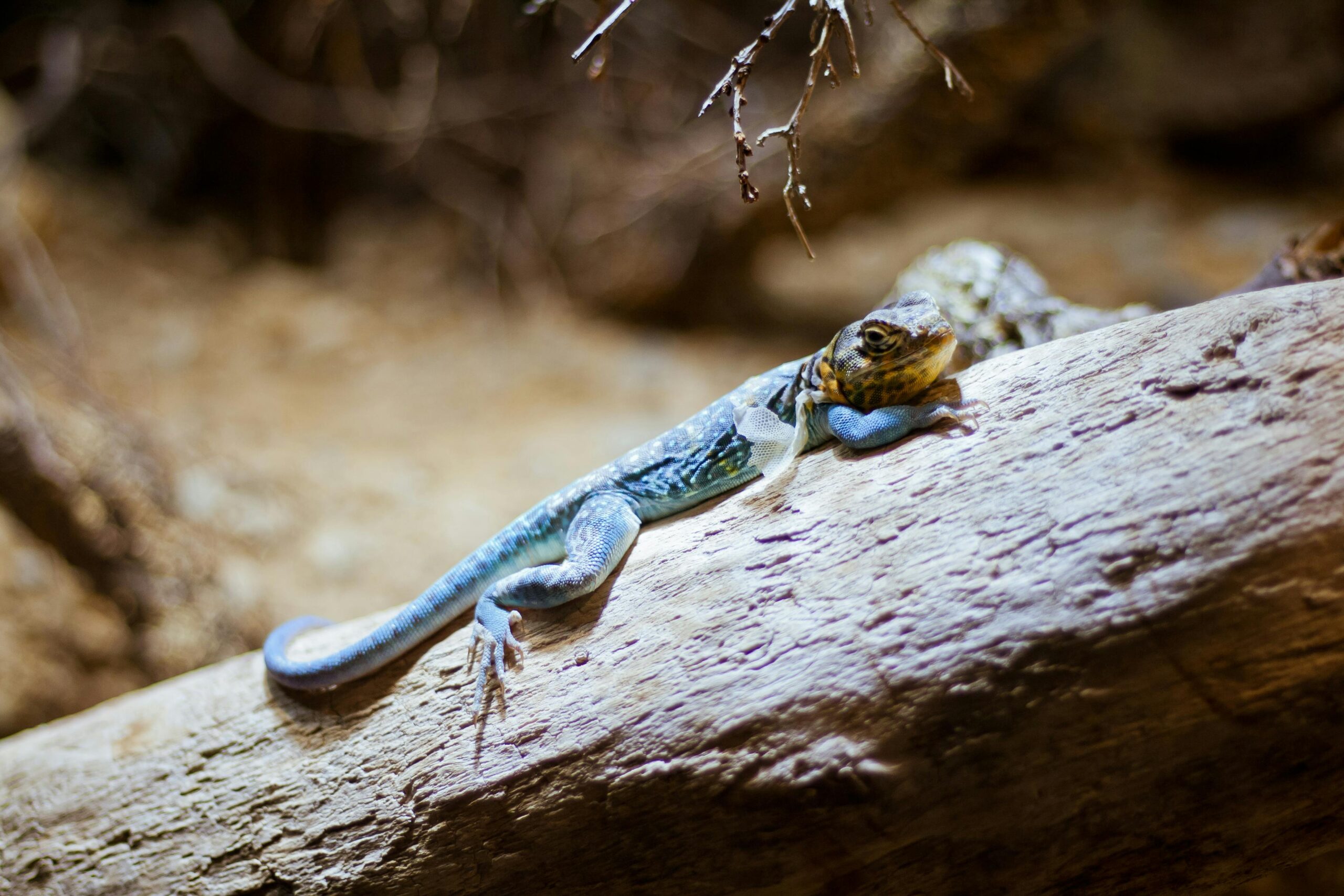
Temperature and humidity are the two environmental variables that have the most direct impact on your gecko’s health. Get them right and your gecko’s digestion, immune system, shedding, and behavior all function as they should. Get them wrong and no amount of good feeding or supplementation will compensate for the problems that follow.
This guide covers the full picture on temperature and humidity for geckos, including why these parameters matter, what the correct ranges are for the most commonly kept species, how to measure and maintain them accurately, and how to troubleshoot when something isn’t working.
Why Temperature Matters for Geckos
Geckos are ectotherms. Unlike mammals and birds, they cannot generate body heat internally and rely entirely on their environment to achieve the temperatures they need for every biological process. Temperature governs digestion, immune function, metabolism, activity level, reproductive cycles, and the ability to fight off infection.
A gecko kept at the correct temperature processes food efficiently, maintains a healthy immune response, behaves normally, and sheds cleanly. A gecko kept too cold digests slowly or not at all, becomes lethargic, loses its appetite, and becomes vulnerable to bacterial and parasitic infections that a properly warmed gecko would fight off easily. A gecko kept too hot experiences stress, dehydration, and in extreme cases fatal overheating.
This is why providing a thermal gradient is more important than hitting a single target temperature. A gradient gives your gecko the ability to choose its preferred body temperature by moving between warmer and cooler zones throughout the day and night, just as it would in the wild by moving between sun-warmed surfaces and cool shade or burrows.
Understanding Thermal Gradients
A thermal gradient means the warm end of your enclosure is significantly warmer than the cool end, with a range of temperatures in between. Your gecko moves along this gradient as its needs change throughout the day.
After eating, a gecko typically moves to the warm end to aid digestion. During the hottest part of the day it may retreat to the cool end or a burrow. At night, ground-dwelling species often move between zones as they hunt.
Setting up a gradient means your heat source should cover approximately one third of the enclosure floor or ceiling on one end, leaving the other two thirds to cool naturally to ambient temperature. The cool end should be genuinely cool, not just slightly less warm.
Temperature Requirements by Species
Leopard Geckos
Leopard geckos come from arid regions of Pakistan, Afghanistan, and northwest India where daytime ground surface temperatures can be extreme but burrows provide significantly cooler retreats.
Warm side surface temperature: 88 to 92°F (31 to 33°C) Cool side temperature: 72 to 78°F (22 to 26°C) Overnight low: no lower than 65°F (18°C)
The warm side temperature refers to the surface your gecko actually sits on, measured with a temperature gun at substrate level. Many beginners check air temperature, which reads lower than surface temperature and gives a misleading picture of what the gecko is actually experiencing.
Leopard geckos are tolerant of a fairly wide temperature range compared to some species, but chronic exposure to temperatures below their requirements is a common cause of health problems in captive animals.
Crested Geckos
Crested geckos come from New Caledonia, a humid subtropical island environment with relatively moderate and consistent temperatures. They are unusual among commonly kept gecko species in that they are sensitive to heat in a way most keepers don’t anticipate.
Daytime temperature: 72 to 78°F (22 to 26°C) Nighttime temperature: can drop to 65 to 70°F (18 to 21°C), which many keepers find mimics natural conditions well Maximum safe temperature: 82°F (28°C). Sustained temperatures above this cause serious heat stress
Crested geckos do not require a basking spot in the way desert species do. They need a temperature range that sits comfortably in the low-to-mid 70s for most of the day. For keepers in temperate climates, room temperature during spring and fall often naturally falls within this range without supplemental heating. In summer, cooling the room or the enclosure becomes the priority rather than heating it.
African Fat-Tailed Geckos
African fat-tailed geckos come from the humid savannas of West Africa and have requirements broadly similar to leopard geckos with slightly higher humidity needs.
Warm side surface temperature: 88 to 92°F (31 to 33°C) Cool side temperature: 75 to 80°F (24 to 27°C) Overnight low: no lower than 70°F (21°C)
Tokay Geckos
Tokay geckos are large, tropical arboreal geckos from Southeast Asia with different requirements from desert species.
Daytime temperature: 80 to 85°F (27 to 29°C) Nighttime temperature: 72 to 78°F (22 to 26°C)
Day Geckos
Day geckos (Phelsuma species) are diurnal and come from Madagascar and surrounding islands. They benefit from a basking spot as well as cooler retreat areas.
Basking spot: 85 to 90°F (29 to 32°C) Cool side: 75 to 80°F (24 to 27°C) Overnight low: 68 to 72°F (20 to 22°C)
Measuring Temperature Correctly
The tool you use to measure temperature matters enormously. Dial thermometers, including most of those sold in pet stores as reptile accessories, are notoriously inaccurate and should not be relied on. They often read several degrees off from actual temperature, which can make you think everything is fine when your gecko is living outside its required range.
Temperature guns (infrared thermometers) are the most practical and accurate tool for checking surface temperatures at gecko level. Point and shoot at the substrate surface on both the warm and cool sides. They’re inexpensive and give an instant, reliable reading of the surface temperature your gecko actually experiences.
Digital probe thermometers provide continuous monitoring from a fixed position. Place one probe on the warm side and one on the cool side for an ongoing read of your gradient. These are useful for tracking overnight temperatures and catching any equipment issues.
Use at least one of these tools before your gecko comes home and check temperatures regularly, not just at initial setup. Equipment performance can change over time, and temperature can fluctuate seasonally as ambient room temperature changes.
Heating Equipment
Under-Tank Heaters
Under-tank heaters (UTHs) heat from below and are widely used for ground-dwelling species like leopard geckos that naturally warm themselves through contact with heated ground surfaces. Position the UTH under one third of the enclosure on the warm side.
A thermostat is non-negotiable with any heating equipment. Without one, UTHs can reach temperatures that burn through substrate and injure your gecko. A mat stat or proportional thermostat set to your target warm side temperature keeps heat output consistent and safe.
Place your temperature gun probe at substrate surface level above the UTH to set the thermostat correctly. Don’t trust the thermostat’s display alone.
Overhead Heating
Overhead heat sources including ceramic heat emitters, deep heat projectors, and halogen flood bulbs heat from above. Deep heat projectors in particular have become popular because they produce infrared wavelengths that penetrate tissue more effectively than surface-only heat, more closely mimicking solar radiation.
Overhead heating is the primary method for most arboreal and diurnal species and works well for any species. It should also be run through a thermostat.
Room Heating
For species with moderate temperature requirements like crested geckos, maintaining the room at an appropriate temperature is often the most practical approach. A small room heater or air conditioner can maintain ambient conditions within the required range without requiring complex in-enclosure heating setups.
Why Humidity Matters
Humidity, the moisture content of the air, affects geckos in several important ways.
The most immediate effect is on shedding. Skin that dries out in low humidity becomes difficult to remove and leads to retained shed, which can cause serious injury particularly on the toes and eye caps. Adequate humidity during the pre-shed phase is the single most effective way to prevent shedding problems.
Humidity also affects hydration. Geckos absorb moisture through their skin as well as drinking. An environment that is too dry contributes to dehydration over time, even when fresh water is provided. Signs of chronic low humidity include sunken eyes, wrinkled skin, and repeated retained shed.
Respiratory infections are associated with excessive humidity combined with poor ventilation. A humid enclosure that doesn’t have adequate airflow develops stagnant, bacteria-rich conditions that damage respiratory tissue over time. The goal is appropriate humidity with good ventilation, not just high humidity.
Humidity Requirements by Species
Leopard Geckos
Leopard geckos are often thought of as desert animals that need very low humidity, but this isn’t entirely accurate. Wild leopard geckos spend their days in burrows where humidity is significantly higher than the arid surface above. In captivity, providing a range is more appropriate than maintaining uniformly low humidity.
Ambient humidity: 30 to 40 percent Moist hide: always available with damp substrate inside
The moist hide is the critical element for leopard gecko humidity management. It gives the gecko access to higher humidity whenever it needs it, particularly during the pre-shed phase, while maintaining lower ambient humidity that doesn’t promote bacterial growth in the broader enclosure.
Crested Geckos
Crested geckos need substantially higher humidity than desert species, reflecting their forest origins.
Ambient humidity: 60 to 80 percent Overnight peak: can rise to 80 to 100 percent with evening misting, then drop through the night as ventilation allows
The natural humidity pattern in a crested gecko’s native environment involves high humidity at night when dew falls, dropping somewhat during the day. Evening misting that raises humidity, followed by a gradual drop through good ventilation overnight and into the following day, replicates this cycle and is considered best practice.
African Fat-Tailed Geckos
African fat-tailed geckos need higher humidity than leopard geckos, reflecting the more humid savanna environment they come from.
Ambient humidity: 50 to 70 percent Moist hide: always available
Tokay Geckos
Ambient humidity: 70 to 80 percent. Regular misting is typically required to maintain this.
Day Geckos
Ambient humidity: 60 to 80 percent, with regular misting.
Measuring Humidity
A digital hygrometer is the correct tool for monitoring humidity. Analog dial hygrometers are as unreliable as analog thermometers and should be avoided.
Position the hygrometer in the middle of the enclosure rather than directly next to a misting point or water source, which would give an inflated reading that doesn’t represent conditions throughout the enclosure.
For species that require misting, measure humidity before and after misting and monitor how quickly it drops to understand your enclosure’s ventilation rate. This helps you establish a misting schedule that maintains humidity in the correct range consistently.
Maintaining Humidity
Misting
Manual or automated misting is the primary method for maintaining humidity in humid-climate species. A simple spray bottle works for small setups. Automatic misters provide more consistent results and are worth the investment for species that need reliably high humidity. Mist one side of the enclosure and allow the other side to stay drier, giving your gecko the choice to move between zones.
Substrate Choice
Substrate holds and releases moisture and is a major factor in humidity stability. Coconut fiber, sphagnum moss, and organic topsoil blends all hold moisture well. Tile or paper towel substrates contribute nothing to humidity and require more frequent misting to compensate.
Enclosure Design
Enclosures with more ventilation lose humidity faster than those with less. Screen-top enclosures, while providing excellent airflow, are difficult to maintain at high humidity and typically need covers over much of the screen to reduce moisture loss. Front-opening enclosures with partial ventilation panels are better suited to humidity-requiring species.
Troubleshooting
Temperatures on the warm side are too low: check that your UTH or overhead heater is functioning, that your thermostat probe is positioned correctly, and that your thermostat setpoint is high enough. In a cold room, additional insulation around the enclosure or a higher-wattage heat source may be needed.
Temperatures are too high: check thermostat function. If using a UTH without a thermostat, add one immediately. If using overhead heating, move the heat source further from the enclosure surface or reduce wattage.
Humidity is too low: increase misting frequency, switch to a moisture-retaining substrate, reduce ventilation slightly, or add a moist hide. Placing a water dish near the heat source will also increase evaporation and ambient humidity.
Humidity is too high: improve ventilation, reduce misting frequency, allow wet substrate to dry more between misting sessions. Persistent excessive humidity combined with a damp enclosure creates conditions for respiratory infections and bacterial growth.
Gecko is lethargic despite correct temperatures: verify temperatures at surface level with a temperature gun rather than relying on air temperature readings. Also check that the cool side is genuinely cool and not just marginally cooler than the warm side, which would prevent proper thermoregulation.
Getting temperature and humidity right is the foundation of gecko keeping. Everything else builds on these parameters. With accurate measurement tools, appropriate equipment, and a consistent routine for monitoring and adjusting, maintaining the right conditions becomes second nature quickly.
For guidance on the full enclosure setup including substrate, hides, and lighting, see our complete Gecko Tank Setup guide.